
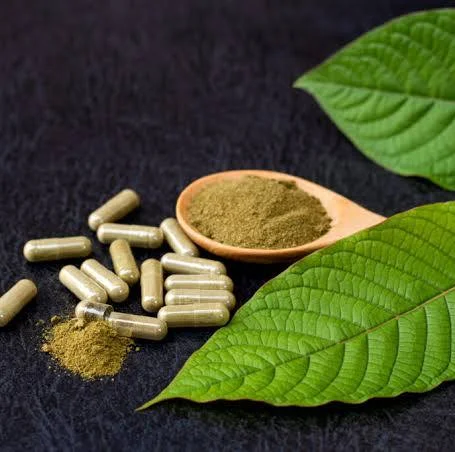
The U.S. Food and Drug Administration has not approved kratom for any medical use. The agency classifies mitragynine and 7-hydroxymitragynine, the primary alkaloids in kratom, as substances of concern and maintains import alerts that allow federal authorities to detain kratom shipments at the border.
Between 2019 and 2025, the FDA issued dozens of warning letters to companies marketing kratom as a treatment for opioid withdrawal, chronic pain, anxiety, and other medical conditions. These enforcement actions targeted both product manufacturers and retail distributors making unsubstantiated therapeutic claims that violate federal marketing regulations.
In 2016, the Drug Enforcement Administration proposed scheduling kratom as a Schedule I controlled substance but withdrew the proposal after receiving extensive public comment. Kratom remains unscheduled at the federal level, which has allowed individual states and municipalities to establish their own regulations. The DEA continues to list kratom as a drug of concern and monitors use patterns, but no renewed federal scheduling effort has been finalized as of early 2026.
Recent FDA enforcement has focused on product contamination and safety. The agency conducted multiple recalls throughout 2024 and 2025 after identifying salmonella contamination in kratom products distributed across several states, including California. Laboratory testing also revealed the presence of heavy metals, bacterial contaminants, and undisclosed synthetic opioids in certain batches, prompting mandatory recalls and import detentions.
At the state level, California health authorities have escalated their response to kratom-related safety data. The California Department of Public Health issued consumer advisories citing the FDA’s adverse event database, which as of 2025 documented hundreds of reports involving hospitalization, seizures, respiratory depression, and death. These advisories were cited during legislative discussions that preceded the 2026 statewide sales ban.
California’s enforcement posture shifted significantly after poison control data showed a year-over-year increase in kratom-related calls across Los Angeles, San Diego, and the Bay Area. The California Poison Control System reported that calls involving kratom increased notably between 2022 and 2024, with a disproportionate share involving high-potency extract products. Public health officials used this data to support arguments for broader state-level action beyond the patchwork of municipal ordinances already in place.
Can I legally buy kratom in California?
As of 2026, kratom is no longer legal to purchase anywhere in California. The state enacted a statewide sales ban that supersedes all previous local ordinances, including the earlier bans in San Diego and Oceanside. Retailers across California, including smoke shops, supplement stores, and convenience stores, are prohibited from selling kratom in any form.
Personal possession of kratom is addressed differently under the law. The statewide ban targets commercial sales rather than individual possession, so residents who already own kratom products are not subject to criminal penalties under the sales prohibition alone. However, purchasing kratom from any California retailer, whether in person or through a local delivery service, violates the current statewide ban.
Online purchases from out-of-state vendors shipped to California addresses occupy a more complex legal position. The statewide ban creates grounds for enforcement against vendors shipping into California, and state regulators have indicated that enforcement against out-of-state sellers shipping to California residents is part of ongoing regulatory efforts. Californians ordering kratom online do so against a backdrop of increasing state scrutiny of these transactions.
California Kratom Ban 2026
California enacted a statewide ban on kratom sales in 2026, making it one of the largest states in the country to prohibit the substance at the state level. The legislation prohibits the retail sale of kratom in all forms, including raw leaf powder, capsules, extracts, and concentrated alkaloid products such as synthetic 7-hydroxymitragynine. The ban applies uniformly across all 58 counties, eliminating the prior patchwork of city-by-city ordinances.
The law defines kratom broadly to include any product derived from the Mitragyna speciosa plant or containing its primary alkaloids, mitragynine and 7-hydroxymitragynine. Retailers found selling covered products after the effective date face administrative penalties beginning at $1,000 for a first violation. Subsequent violations carry escalating fines and can result in suspension or permanent revocation of a business license. The California Department of Consumer Affairs coordinates enforcement alongside local health departments, which have authority to conduct inspections and issue citations.
The ban does not create a criminal penalty for personal possession. A California resident who possesses kratom for personal use is not subject to arrest or prosecution under the sales prohibition statute. The law is directed at the commercial supply chain, covering manufacturers, distributors, wholesalers, and retail sellers operating within the state.
Products already on shelves at the time the ban took effect were subject to a limited sell-through grace period that has since expired. Any kratom products currently held by retailers must be removed from sale. Businesses that fail to clear inventory face the same penalties as those that continue active sales.
The California Department of Public Health issued formal guidance accompanying the ban, identifying the health basis for the legislation. The department cited the FDA’s adverse event database, poison control data showing rising call volumes related to kratom, documented contamination in commercial kratom products, and the growing availability of high-potency synthetic alkaloid products as the primary factors supporting statewide action. Dr. Tomas Aragon, who has served in public health leadership roles in California, has previously commented on the state’s approach to emerging substance safety concerns, noting that California acts when population-level risk data reaches a threshold that local ordinances cannot adequately address.
Cities that previously enacted their own kratom bans, including San Diego and Oceanside, are now governed by the statewide law. The state ban does not preempt local ordinances that were stricter than state law, though as a practical matter the statewide prohibition renders local sales bans redundant.
Public and Retailer Reactions to the California Kratom Ban
- The statewide ban generated significant pushback from two distinct groups: consumers who used kratom regularly and small business owners who relied on kratom product sales as part of their revenue.
Many consumers who used kratom to manage chronic pain or reduce dependence on prescription opioids expressed concern that the ban eliminated a product they viewed as a lower-risk alternative. Some advocacy groups, including the American Kratom Association, argued that the California legislature acted on incomplete data and that responsible kratom use at standard doses presents a different risk profile than the high-potency extract products that drove most of the adverse event reports. The association has previously funded independent research and lobbied against state-level bans, contending that regulation rather than prohibition would better protect consumers by establishing quality and labeling standards.
Public health advocates took the opposite position. Groups representing emergency medicine physicians and addiction medicine specialists supported the ban, pointing to the documented deaths and hospitalizations in the FDA’s adverse event database and expressing particular concern about the spread of synthetic 7-hydroxymitragynine products into the retail market. Dr. Andrew Kolodny, a physician and addiction researcher at Brandeis University who has written extensively on opioid policy, has previously described kratom’s active alkaloids as opioid receptor agonists with addiction and overdose potential that warrants regulatory control.
Retailers faced immediate financial disruption. Smoke shops, supplement stores, and herbal product vendors in California reported that kratom had become a meaningful revenue category, particularly as demand grew after 2020. Business owners in San Diego and other areas that had already operated under local bans were less affected because they had adjusted inventory years earlier. Retailers in Los Angeles, Sacramento, and the Bay Area had not faced prior restrictions and reported having to absorb remaining inventory costs when the statewide ban took effect.
Several California retailers have indicated they are reviewing whether the ban creates viable grounds for a legal challenge on commerce or due process grounds, though no significant litigation has been publicly filed challenging the 2026 statute as of the date of this publication. Legal observers note that courts have generally upheld state and municipal kratom bans where legislators can point to a rational public health basis for the restriction, making a successful challenge difficult.